
2026-09-07 · Miguel Soto
Signs Your Air Ducts Need Attention After Santa Ana Winds
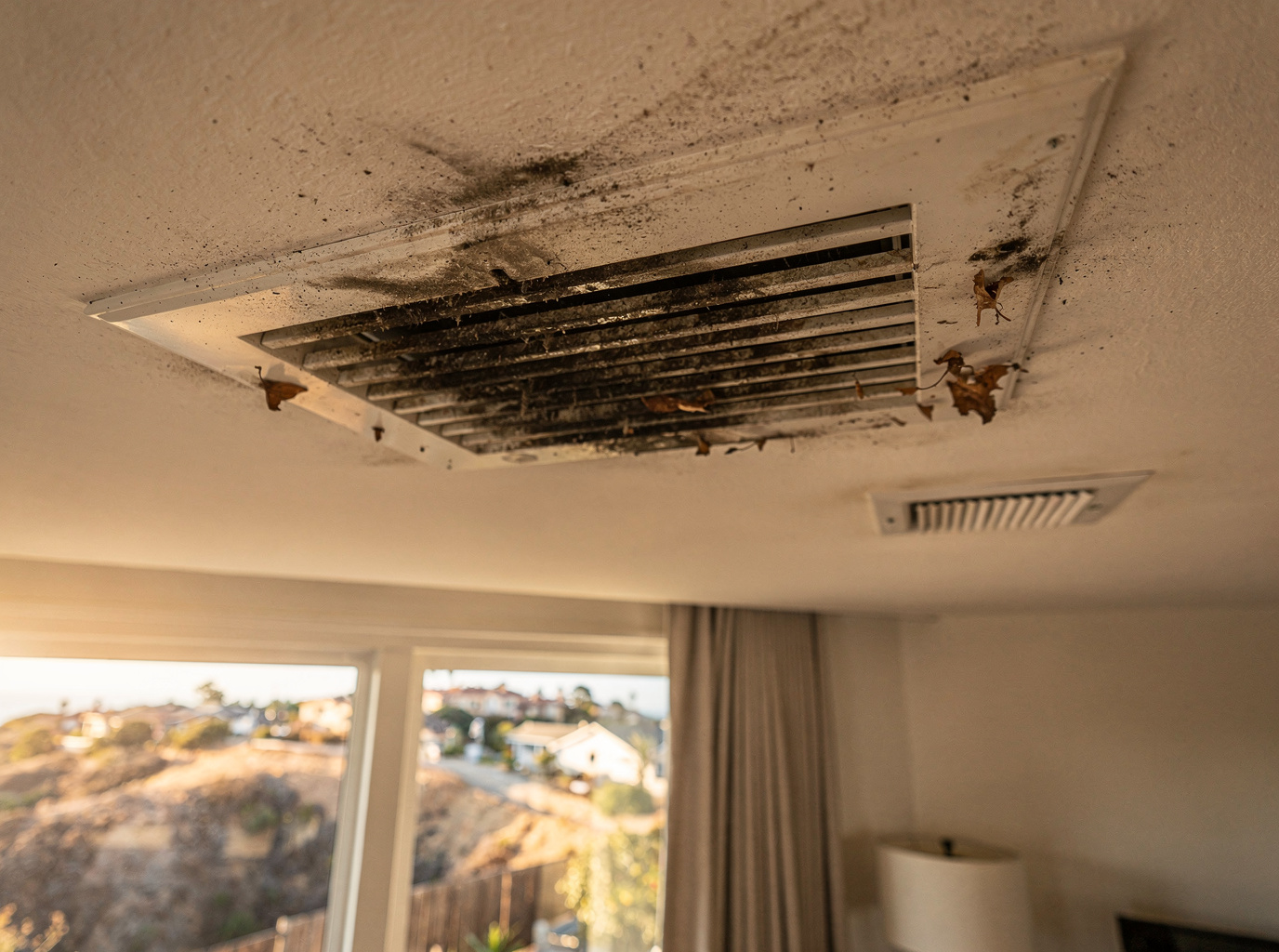
After Santa Ana winds pass through Palos Verdes Estates, the most common signs that air ducts need attention are increased fine dust on surfaces near vents, sudden musty or earthy odors when the HVAC runs, and uneven airflow across rooms in hillside homes. These winds carry dry particles from inland valleys that settle into unsealed duct joints and registers, especially in homes built on the slopes above Via Tejon.
Dust Buildup from Wind-Driven Particles
Santa Ana events stir up fine silt and pollen that travel across the Palos Verdes Peninsula and settle into return-air pathways. In neighborhoods like the Hillcrest and Lunada Bay areas, older single-story homes with attic ducts often show gray film on furniture within days of a strong wind event. Homeowners notice this dust reappears quickly even after routine cleaning because the particles have already lodged inside the trunk lines. Checking registers in multiple rooms reveals whether the debris is concentrated near exterior walls or roof penetrations where wind pressure is highest. When accumulation appears heavier than seasonal norms, it signals the need for a targeted inspection rather than repeated surface wiping.
Changes in Airflow and System Strain
Strong Santa Ana gusts can force extra load on HVAC blowers as debris partially blocks filter media and coil fins. Residents in Rolling Hills Estates and Rancho Palos Verdes frequently report one or two rooms that suddenly feel warmer or cooler than the rest of the house after these winds. Measuring airflow at each vent with a simple handheld anemometer shows drops of 20 percent or more compared with pre-wind readings. This imbalance often traces back to collapsed flex duct sections or shifted dampers that occurred when high-velocity air pushed through the system. Addressing the restriction early prevents the blower motor from running longer cycles and drawing higher amperage.
Odors and Indoor Air Quality Shifts
Dry Santa Ana air can carry smoke residue or mold spores from distant burn areas into duct interiors where moisture from the marine layer later condenses. In Palos Verdes Estates homes near the bluff tops, a faint burning or earthy smell appears when the system first starts after a wind event. These odors intensify in bathrooms and laundry rooms because those ducts run longer horizontal runs with fewer turns. Tracking when the smell occurs—only on heat mode or only after sunset—helps isolate whether the source sits in the main trunk or a specific branch line serving the west-facing bedrooms.
When to Schedule an Inspection
Homeowners who observe two or more of these indicators together benefit from a full duct evaluation rather than isolated vent cleaning. Emergency Air Duct Cleaning crews familiar with the local terrain can access hillside crawl spaces and attic runs without disturbing established landscaping. Comparing readings before and after service confirms whether the Santa Ana debris has been removed or whether deeper sections still hold residue. Pairing this check with the guidance in How Marine Layer Affects Air Ducts in Palos Verdes Estates Homes helps residents understand how the next moisture event may interact with wind-deposited particles.
Practical Next Steps for Palos Verdes Estates Residents
Start by noting the date of the most recent Santa Ana event and photographing any visible dust patterns. Replace the HVAC filter with a new MERV-8 or higher model and run the system for 15 minutes while observing each register. If dust or odor returns within 48 hours, contact PureStream Solutions at the 2516 Vía Tejon address for a 24/7 assessment. 24/7 Air Duct Cleaning teams can schedule evening or weekend visits that align with typical commuter patterns in the area. Documenting these steps creates a clear record for future reference when marine layer humidity returns and interacts with any remaining wind-borne material.